Resonant Signs: Secret Places, Sacred Spaces
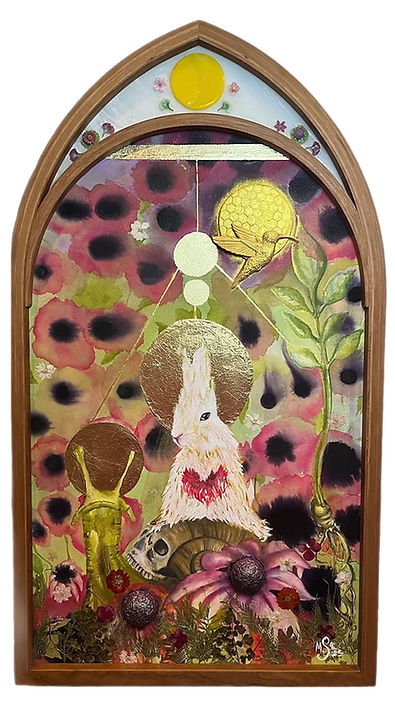
Project Description — Resonant Signs: Secret Places, Sacred Spaces
Resonant Signs: Secret Places, Sacred Spaces is a twelve-part body of work exploring natural color as a living record of place, time, cultural memory, and material knowledge. Started in 2024, the project brings historical craft processes into contemporary practice through botanical dyes and pigments, works on paper, glass, and sustainably sourced cherrywood. At its center is a question: What can the transformation of plant and earth into color teach us about how knowledge is carried across generations? The project was made possible in part through support from the Indiana Arts Council and the Cristal DeHaan Foundation. In 2024, I received the DeHaan Artist of Distinction Award, which supported the construction of my first dedicated studio in Bloomington, Indiana. This studio has become a vital space for the research, observation, and slow material processes central to Resonant Signs.
My practice is rooted in historical methods of colormaking associated with illuminators, natural dyers, and early painters. I research the transformation of botanical materials into usable color, drawing from traditions that relied on plants, earth, and other natural sources before synthetic pigments became widespread in the nineteenth century. I am particularly interested in the knowledge embedded within these processes: gathering, extracting, concentrating, drying, and grinding a bloom, leaf, root, bark, or soil into pigment. A single color can require ten days or more to prepare. Rather than reproducing historical recipes exactly, I use these methods as points of departure, adapting them to specific plants, landscapes, and contemporary questions.
Each painting corresponds to one month of the year, with its palette derived from seasonal colors and ethically gathered botanical materials from the Bloomington landscape. Twelve companion photographs extend the paintings into the surrounding environment, documenting the wild spaces and animals that inhabit these places. The paintings are housed within glass and cherrywood structures developed collaboratively with local craftspeople. A local woodworker and I developed the sustainably sourced cherrywood containers, while a glass artist and I incorporated cosmological observations corresponding to the month in which each painting was created. The extended duration of the project allows time itself to become a material. I must wait for particular seasons to ethically gather plants, observe celestial events, and allow colors to develop through processes that cannot be accelerated. The work therefore records not only what the landscape looks like, but when it becomes available to us and what it requires of us as makers.
Resonant Signs investigates how historical material knowledge can be reactivated through contemporary art. By translating traditional methods of colormaking through a specific landscape and present-day experience, I seek to create a living archive—one that honors the past while allowing its knowledge to evolve. The resulting works become both artworks and material records: a year held in color, paper, glass, and wood, and a contemporary archive of the living color palette of the Midwest.